
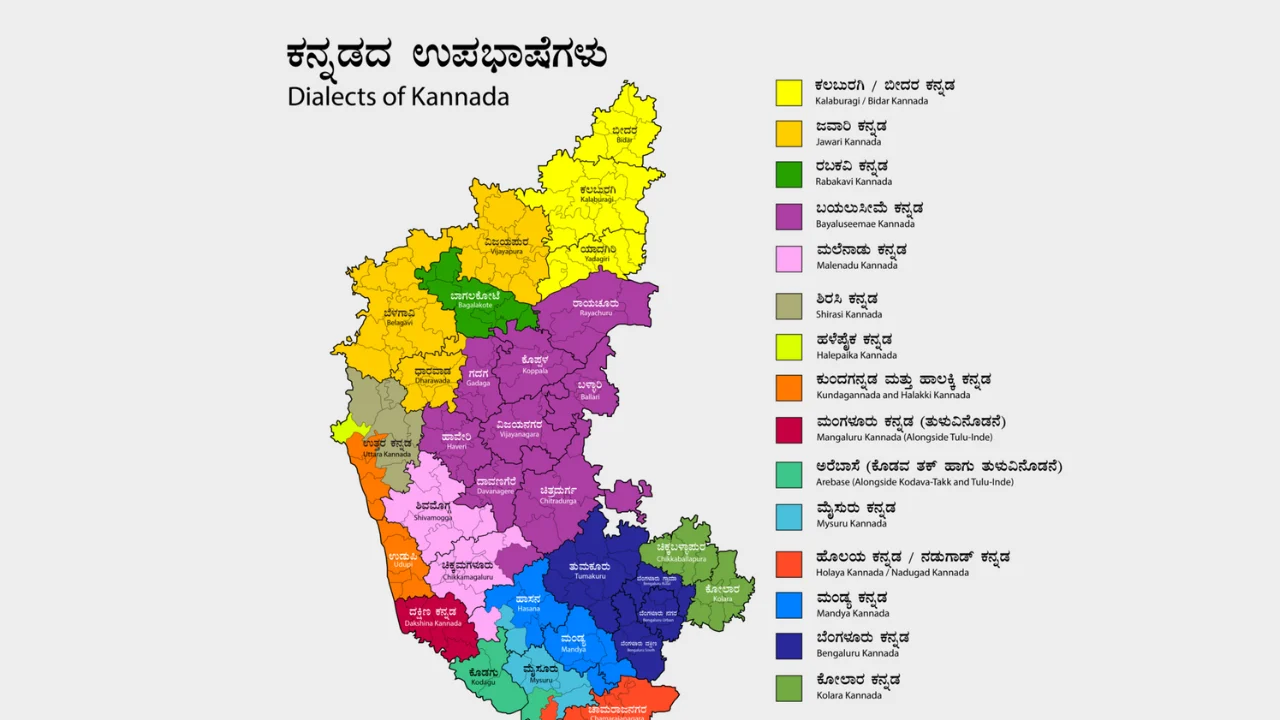
Kannada isn’t just one uniform way of speaking or writing—it’s a living, breathing language with many beautiful varieties shaped by history, geography, and usage. If you’re learning Kannada (or already love it), understanding its types will help you speak more naturally and confidently.
Let’s break it down in a simple, learner-friendly way.
1. Old Kannada (ಹಳೆಗನ್ನಡ / Halegannada)
Old Kannada dates back to around the 5th century CE and was mainly used in inscriptions and classical literature.
Where you’ll see it:
- Ancient stone inscriptions
- Classical poetry and epics
- Temple records
Good to know:
This form isn’t used in daily conversations today but is crucial for understanding Kannada’s roots and literary heritage.
2. Middle Kannada (ಮಧ್ಯಗನ್ನಡ / Madhyagannada)
Middle Kannada evolved between the 12th and 18th centuries. It’s a bridge between Old Kannada and the modern language.
Where you’ll find it:
- Works of famous poets like Kumara Vyasa
- Devotional (Bhakti) literature
Why it matters:
Many modern words and grammar structures came from this phase.
3. Modern Kannada (ಆಧುನಿಕ ಕನ್ನಡ / Aadhunika Kannada)
This is the Kannada we use today—but even modern Kannada has different forms depending on where and how it’s used.
4. Written Kannada (ಲಿಖಿತ ಕನ್ನಡ)
This is the formal form of the language.
Used in:
- Books and novels
- Newspapers
- Exams and official documents
Characteristics:
- More Sanskrit-based vocabulary
- Formal sentence structure
Most Kannada learners first encounter this type in textbooks.
5. Spoken Kannada (ಮಾತನಾಡುವ ಕನ್ನಡ)
Spoken Kannada is casual, flexible, and practical.
Used in:
- Daily conversations
- Offices and markets
- Friend and family interactions
Key difference:
It’s simpler and often very different from written Kannada.
Example:
- Written: ನಾನು ಊಟ ಮಾಡುತ್ತೇನೆ
- Spoken: ನಾನ್ ಊಟ ಮಾಡ್ತೀನಿ
6. Regional Dialects of Kannada
Here’s where Kannada gets really colorful.
Spoken Kannada changes significantly from region to region.
Some popular regional types include:
- Bengaluru Kannada – Urban, mixed with English and other languages
- Mysuru Kannada – Considered clear and soft; often used for learning
- North Karnataka Kannada – Distinct accent and vocabulary
- Mangaluru Kannada – Influenced by Tulu and Konkani
- Dharwad / Hubballi Kannada – Strong cultural identity
7. Professional & Corporate Kannada
This is a polite, neutral form often used in:
- Offices
- Customer service
- Corporate training
It blends written correctness with spoken simplicity—perfect for professionals working in Karnataka.
Why Understanding These Types Matters
- Helps you communicate better in real-life situations
- Makes learning Kannada less confusing
- Builds cultural awareness and confidence
At KannadaClass, we focus on spoken, practical Kannada while also helping learners understand formal and professional usage—so you feel at home anywhere in Karnataka.
Want to learn the right type of Kannada for your needs?
Spoken. Corporate. Writing. Basics.
We’ve got you covered 😊, Reach us now!